Author: DeeDee Bennett

  • What Should You Fix Before Selling Your Home in Amarillo?

    What Should You Fix Before Selling Your Home in Amarillo?

    If you’re thinking about selling your home in Amarillo, you may already be looking around and wondering what needs to be fixed before you put it on the market.

    So naturally, you start looking around.

    The floors suddenly look dated. The bathroom needs help. Maybe the countertops should go. And if we’re replacing those, perhaps we should paint the cabinets. And now that you’re thinking about it, maybe this is finally the time to remodel the kitchen…

    Pump the brakes.

    Before you spend a dime getting your house ready to sell, let me come look at it.

    I want to see the house, run the comps, know what updates you’ve already completed and—most importantly—understand your goals for the sale.

    How quickly would you like to sell?

    How much would you like to walk away with?

    How much money are you comfortable putting into the house before it goes on the market?

    Those answers matter because preparing a house for maximum price may look different from preparing one for minimum hassle or a faster sale.

    Maybe we do need to replace something.

    Maybe we offer a buyer concession instead.

    And maybe that project you were about to spend $20,000 on doesn’t need to happen at all.

    So before you call the contractor, call your Realtor.

    Staged living room with moving boxes illustrating selling your home in Amarillo

    Start With the Down and Dirty—Literally

    There are some things I recommend to almost every seller, and most of them don’t involve a remodeling crew.

    First:

    Deep clean the house.

    Then declutter it by at least 30%.

    Already decluttered?

    Do it again. 😂

    My goal is for a buyer to walk in and almost wonder, Does somebody actually live here, or has this house been staged?

    We’re trying to give buyers enough visual breathing room to imagine their furniture, their Christmas tree and their life happening in the space.

    This isn’t just Realtor folklore. In NAR’s 2025 staging survey, the three most common recommendations agents gave sellers were decluttering, cleaning the entire home and improving curb appeal. National Association of REALTORS®

    Make That Porch Pop

    Before buyers ever see your kitchen, they see the outside of your house.

    Let’s clean up the flower beds.

    Power wash where appropriate. Clean the exterior windows. Trim things that need trimming. Add fresh mulch if the beds need it.

    And let’s make that porch pop.

    You don’t need to landscape the grounds of Versailles. We just want buyers pulling up and thinking:

    I want to see what’s inside.

    Curb appeal isn’t fluff, either. NAR research has found that real estate professionals overwhelmingly consider it important in attracting buyers. National Association of REALTORS®

    Kitchens and Bathrooms Deserve Extra Attention

    These are rooms where buyers tend to notice condition, cleanliness and maintenance very quickly.

    Start with the glamorous stuff.

    Tighten your toilets.

    I know that sounds ridiculous, but loose toilets come up frequently during inspections, and nobody wants to feel like they’re riding a bucking bronco when they go to the bathroom.

    Clean the water spots around your fixtures. If something is rusty, crusted over with hard-water deposits or simply beyond saving, let’s talk about replacing it.

    Put out fresh towels. Consider a clean shower curtain and a little greenery. Make sure the room is bright.

    Nobody wants to put on makeup in a dark hole.

    In the kitchen, clear as much as possible from the countertops and give everything a serious scrub—including the oven.

    Touch up nicked or scuffed cabinets.

    Clean the baseboards.

    Yes, the baseboards.

    Nothing whispers, “We’ve stopped paying attention around here,” quite like dusty baseboards.

    Clean the carpets and make the floors shine.

    Before we start replacing countertops or appliances, though, let’s decide which improvement—if any—will actually help us compete with the other homes in your price range.

    Please Don’t Replace Your Floors Without Talking to Me

    Flooring is one of my favorite examples of sellers spending money on something buyers may immediately want to change.

    You install brand-new carpet.

    Your buyer hates carpet.

    You install tile.

    Your buyer thinks tile feels cold.

    You choose laminate.

    Someone else thinks it looks cheap.

    Here in the Panhandle, we even have stained concrete. Some people absolutely love it.

    Others absolutely do not.

    Taste is personal.

    So if the existing flooring is functional but dated, I may prefer that we price accordingly or consider an allowance or concession rather than having you spend thousands choosing a floor your eventual buyer wouldn’t have chosen anyway.

    The same thinking applies to a major kitchen or bathroom remodel.

    A $20,000 renovation has a funny way of becoming considerably more than a $20,000 renovation.

    And there’s no guarantee that your taste will match the next owner’s.

    National remodeling data backs up the need to be strategic: NAR’s 2025 Remodeling Impact Report estimated about 60% cost recovery for both complete and minor kitchen renovations and about 50% for a bathroom renovation. Actual results vary by home, market, materials and project, of course. National Association of REALTORS®

    That’s why I would much rather evaluate the house and the comps before you start swinging a hammer.

    Some Repairs Are Different

    Cosmetic preferences are one thing.

    Problems that can interfere with a buyer’s insurance, financing, inspection or willingness to proceed are another.

    If the roof has significant damage or may create an insurance issue, we need to address that strategically. The Texas Department of Insurance notes that roof age and condition can affect coverage, and insurers may limit or decline roof coverage when a roof is in poor condition. Texas Department of Insurance

    The same principle applies to major mechanical systems.

    If an HVAC system is failing, that’s not the same conversation as whether a buyer likes your bathroom tile.

    Will you necessarily recover every dollar you spend replacing a major system?

    Not always.

    But sometimes the question isn’t simply, “Will this add $10,000 to my sale price?”

    It’s:

    “Could leaving this unresolved make the transaction harder to complete?”

    That’s a very different calculation.

    Decluttering, Depersonalizing and Staging Are Not the Same Thing

    I talk about these three things with almost every seller because they each serve a different purpose.

    Decluttering

    If you haven’t picked it up or used it in six months, there’s a pretty good chance it can go into a bin.

    Dusty tchotchkes?

    Bin.

    Grandma’s china collection?

    Safely packed away.

    Fourteen things sitting on the kitchen counter?

    We can probably live without twelve of them for a few weeks.

    If there isn’t much, boxes can go neatly into the garage. If there’s a lot, this may be the moment when I lovingly say:

    Honey, we’re getting a storage unit.

    Depersonalizing

    This means taking down family photographs, names, awards, certifications and other things that make buyers focus on you.

    I’ve watched buyers walk into houses and spend their time studying the family pictures instead of studying the house.

    That’s not what we want.

    We want them thinking:

    Our couch could go there.

    The kids could play here.

    That’s where we’d put our Christmas tree.

    The research supports that goal: 83% of buyers’ agents in NAR’s 2025 survey said staging helped buyers visualize a property as their future home. National Association of REALTORS®

    Staging

    Staging is different.

    Now we’re deliberately deciding what should remain in the house and what might need to leave.

    Sometimes we’ll move furniture around.

    Sometimes I’ll suggest removing something.

    Sometimes we may bring in a table, chair, rug or decorative piece to help a room feel finished.

    Because—and I say this with love—sometimes your old couch covered in dog hair is not the thing that’s going to make somebody fall in love with your house.

    My daughter works as a listing coordinator in Dallas, and she once summed this up beautifully:

    You want buyers to remember your house as the one with the great layout—not the one with the nasty armchair in the corner or the boxes they had to step around.

    Make the house memorable.

    Just make sure it’s memorable for the right reasons.

    Speaking of Pets…

    I love dogs.

    You know this.

    But people who adore their own dogs can walk into someone else’s house, smell dog and immediately be turned off.

    That’s just reality.

    So before listing, we need to address pet odor and hair.

    Clean the carpets if necessary. Wash fabrics. Keep litter boxes extremely clean and out of sight when possible.

    For photographs and showings, put away pet bowls, beds, toys and crates whenever practical.

    Your pets still live there.

    We just don’t need their entire real-estate portfolio included in the listing photos.

    The Night Before Listing Photos: Do This

    This is when all the preparation comes together.

    Before the photographer arrives:

    Throughout the house: Replace burned-out bulbs. Turn on the lights. Open blinds and window treatments to bring in natural light. Turn ceiling fans off. Hide loose cables, paperwork, magazines, laundry baskets and other visual distractions. Straighten pillows and furniture.

    Kitchen: Clear the countertops except for a few intentional decorative items. Remove everything from the outside of the refrigerator—magnets, photos, calendars and last year’s Christmas cards included. Hide sponges, dish soap, paper towels, pet dishes and trash cans. Empty the sink.

    Bedrooms: Make the beds. Straighten pillows. Clear dressers and bedside tables except for simple decor. Put toys away. Hide laundry hampers, trash cans and diaper pails.

    Bathrooms: Put the toilet lids down. Hang fresh towels neatly. Clear countertops. Remove shampoos, soaps and personal products from showers and sinks.

    Pets: Remove visible crates, carriers, litter boxes, bowls and beds where practical. And if your pet believes the photographer came specifically to document their modeling career, please contain them during the shoot. 😂

    Outside: Move cars away from the front of the house. Put away lawn equipment, trash and recycling bins, hoses, toys and pool supplies. Mow if necessary. Clean up leaves and debris. Open patio umbrellas if they enhance the space. Close the garage door.

    If possible, ask the neighbors not to park directly in front of the house during photography.

    We want the photographer to have a clean, unobstructed view of your home.

    And Then Keep It Going for Showings

    You don’t have to recreate photo day every time someone schedules a showing.

    But get as close as reasonably possible.

    Beds made.

    Counters clear.

    Lights on.

    Blinds open.

    Toilet lids down.

    Pet evidence minimized.

    Comfortable temperature.

    And above all:

    Clean and fresh.

    Don’t try to cover an odor with enough fragrance to knock a buyer over at the front door. Clean is better than heavily perfumed.

    Selling Your Home in Amarillo Isn’t About Perfection

    This process can feel personal.

    It’s your house.

    Those are your photographs.

    That’s your grandmother’s china.

    That’s your dog’s bed.

    That’s the couch where your family has watched movies for ten years.

    When I ask you to pack something away, I’m not telling you that your home is ugly or that you’ve lived in it incorrectly.

    We’re simply changing its job.

    For however long it’s on the market, your home isn’t only the place where you live anymore.

    It’s also a product we’re presenting to someone who’s trying to imagine what their life might look like there.

    And that’s why I always come back to this:

    The goal isn’t to make your house perfect.

    The goal is to make it the perfect house for the buyer.


    Thinking About Selling Your Amarillo or Canyon Home?

    Before you replace the floors, remodel the kitchen or spend thousands of dollars getting your house “ready,” let me walk through it with you.

    We’ll look at the comps, talk about your timeline and goals, and decide which projects are worth your money—and which ones you can skip.

    Sometimes the best pre-listing advice I can give you is what not to do.

    I’m DeeDee Bennett, a REALTOR® with The Homestead Property Group, and I’ve spent nearly a decade helping buyers and sellers navigate real estate in the Texas Panhandle.

    Every Home Tells a Story — Let me help you write your family’s next chapter.

  • New Construction vs. an Older Home in Amarillo: Which Is Right for You?

    There’s something pretty irresistible about walking into a new construction home in Amarillo.

    Everything is clean. Everything is shiny. Nobody has ever cooked spaghetti in the kitchen, hung a questionable light fixture in the dining room or tried to repair something with duct tape and optimism.

    But then you walk into an older home with big rooms, mature trees, an established neighborhood and considerably more square footage for your money.

    Suddenly, the decision gets a little harder.

    So when buyers ask me whether they should buy new construction in Amarillo or an older home in Amarillo or Canyon, my answer is usually:

    Let’s look at what you’re really getting with each one.

    New construction in Amarillo compared with an older established home

    The Appeal of New Construction in Amarillo

    One of the biggest advantages of new construction is pretty obvious: everything is new.

    You generally have newer systems, newer materials and fewer immediate maintenance concerns. New homes may also come with builder and manufacturer warranties, although coverage varies considerably by builder, product and property.

    Before buying, I want my clients to understand exactly what is covered, for how long and what they need to do if there is a warranty issue.

    But there are tradeoffs.

    When you’re comparing new construction in Amarillo with an older home, it’s important to look beyond the purchase price.

    Newer homes often have a higher price per square foot than older homes. Depending on the development, you may also find smaller rooms, smaller lots and landscaping that has a long way to go before it feels established.

    And around here, a mature tree is practically a luxury item.

    Plant one now and someday you’ll have a beautiful shade tree.

    Someday.

    The New-House Expenses Buyers Sometimes Forget

    Here’s something I want buyers to understand:

    New house does not necessarily mean no additional expenses.

    Depending on what is included with the property, you may still need to budget for things like:

    • Blinds or window coverings
    • Landscaping
    • Irrigation
    • Fencing
    • Appliances
    • Additional storage
    • Other finishing touches that make the house actually function like your home

    If you’re buying or building on one of the larger lots outside the city, the list can grow.

    Some of the newer developments around Amarillo and Canyon offer acre-plus lots, and buyers love the idea of having that much space.

    I understand why.

    But before you fall in love with an acre, let’s talk about what it takes to maintain an acre.

    How much is already fenced? Will you want additional fencing? What about irrigation? Landscaping? How are you going to mow it?

    And if the property isn’t served by municipal trash collection, how will you handle garbage service? Are you hiring a private trash company? Using rollaway carts? Do you need some other solution?

    None of those things mean you shouldn’t buy the house.

    They just need to be part of the real cost of owning it.

    What About an Older Home?

    Older homes can offer some wonderful advantages.

    You can often get more square footage for your money. Rooms may be larger. Lots may be more established. And you may get something that takes decades to create:

    mature landscaping.

    But an updated kitchen and pretty flooring don’t tell us everything we need to know about an older house.

    That’s when we start looking a little deeper.

    What I Look at When Showing an Older Home

    First, I’m paying attention to the roof.

    We get plenty of hail in the Texas Panhandle, so roof age, condition, prior damage and insurability matter. We’ll want the appropriate professionals—and your insurance company when necessary—to help us understand what we’re dealing with before you buy.

    I’m also looking at the windows.

    Have they been replaced? How old are they? Are there visible signs of deterioration, moisture intrusion or other problems that deserve a closer look?

    Then there’s the foundation.

    I’m not diagnosing foundation problems during a showing—that’s a job for qualified professionals—but I am paying attention.

    Cracking around doors or windows, visible movement, unusual floor changes or stair-step cracking in brick or mortar may give us a reason to investigate further.

    A crack doesn’t automatically mean we have a major foundation problem.

    It means we ask another question.

    Plumbing and Sewer Lines Matter, Too

    With an older home, plumbing deserves attention.

    Depending on the property’s age and history, I may recommend having the sewer line scoped with a camera in addition to the regular home inspection.

    We’re looking for things such as damaged or deteriorated piping, cracks, obstructions and root intrusion.

    Those aren’t particularly exciting things to spend money investigating.

    Neither is replacing a sewer line.

    I’ll take the camera inspection.

    For a property with a private well or septic system, those systems require their own due diligence. I want to understand their condition, maintenance history and whether additional inspections or servicing are appropriate before closing.

    Don’t Forget Electrical and Drainage

    Electrical systems are another consideration with older homes.

    A house was generally constructed according to the requirements in effect at the time it was built, and older homes may not have every safety feature or electrical configuration you would expect in a newer house.

    That’s one of the reasons a good inspection matters.

    I also pay attention to drainage.

    Where does the water go when it rains?

    Ideally, water moves away from the foundation toward appropriate drainage rather than collecting against the house.

    You don’t need to become a roofing contractor, electrician, plumber and structural engineer before buying an older home.

    That’s why we hire good professionals.

    My job is to help you know when we need to ask another question.

    Before We Compare the Houses, Let’s Research Their History

    This is a step I think buyers sometimes overlook.

    Before I tell you which house I prefer, I want to know more about who built them.

    Who built the new house?

    Is it part of a large development or a custom build?

    What is the builder’s reputation? What do homeowners say about their experience? If there are older phases or completed homes from the same builder, how are those properties holding up?

    And I want to research the older house, too.

    If we can determine who originally built it, that’s useful information. I also want to know what has happened to the house since then.

    Has it been remodeled?

    Was there a major addition?

    Was plumbing or electrical work performed?

    Was the kitchen substantially reconfigured?

    For significant renovations, we may be able to research available permit history and other records. The City of Amarillo requires permits for many building, remodeling, electrical, plumbing and mechanical projects, and the City of Canyon similarly requires permits for many types of construction, alteration and repair work. Requirements and available records vary by project, jurisdiction and date, so permit history is one piece of our due diligence—not the entire story.

    A beautiful remodel tells me what a house looks like today.

    Its history can help us understand how it got there.

    So Which Would I Choose: New or Old?

    Now we get to the tricky part.

    Let’s say we’ve done our homework.

    We’ve researched the builders. We’ve looked at the inspections. We’ve considered maintenance, repairs and additional costs. Both homes are financially comfortable for you, and neither one has given us a reason to walk away.

    Now I think feelings get to have a seat at the table.

    Where will you put your Christmas tree?

    Can you picture yourself sitting on the front porch or back porch with a cup of coffee?

    Can you see your family making memories in this living room?

    Can you imagine preparing holiday meals in this kitchen?

    When friends or family come to visit, is there enough room to entertain? Where will everyone sleep?

    Does the drive to work, school and the places you regularly go make sense for your everyday life?

    Look around the neighborhood. Do you like how the homes and properties are maintained? Can you picture yourself being part of it?

    And then there’s the question I think matters most:

    Can You See Your Story Being Written Here?

    Does this house feel like it’s part of your family’s next chapter?

    Because eventually, we’re not choosing between new construction and an older home anymore.

    We’re choosing home.

    And once you know which one feels like home, I think you’ve probably found your answer.


    Thinking About Buying in Amarillo or Canyon?

    I’m DeeDee Bennett, a REALTOR® with The Homestead Property Group, and I’ve spent nearly a decade helping buyers and sellers navigate real estate in the Texas Panhandle.

    Whether you’re considering new construction, an established neighborhood, an older home with character or a little land outside town, I’d be happy to help you understand the tradeoffs and ask the questions that matter before you make your decision.

    Because buying a house isn’t just about where you’re going to live.

    It’s about what happens there next.

    Every Home Tells a Story — Let me help you write your family’s next chapter.
  • Moving to Amarillo, Texas? A Lifelong Local’s Guide

    Moving to Amarillo, Texas? A Lifelong Local’s Guide

    So, you’re moving to Amarillo.

    First of all—congratulations. I think you’re going to love it here.

    I’ve lived in Amarillo and the surrounding area my entire life, and after years of helping people buy and sell homes here, I’ve learned that newcomers usually arrive with one of two ideas about the Texas Panhandle:

    Either they picture nothing but cowboys, cattle and tumbleweeds…

    Or they have absolutely no idea what to expect.

    The truth is somewhere in between.

    No, everyone here does not wear boots. Some people don’t even own a pair.

    But you also shouldn’t be terribly surprised if you see a cowboy on horseback going through a McDonald’s drive-through. And occasionally you’ll sit down at a restaurant next to someone who came straight from working cattle and is still wearing his spurs.

    Chances are, he’ll also hold the door for you, tip his hat and say, “Howdy, ma’am.”

    And honestly? It’s pretty great.

    Amarillo May Not Be Pretty in the Traditional Sense

    I’m just going to say it.

    We don’t have mountains. We don’t have an abundance of trees. And water views are… limited.

    What we do have is a distinct kind of beauty.

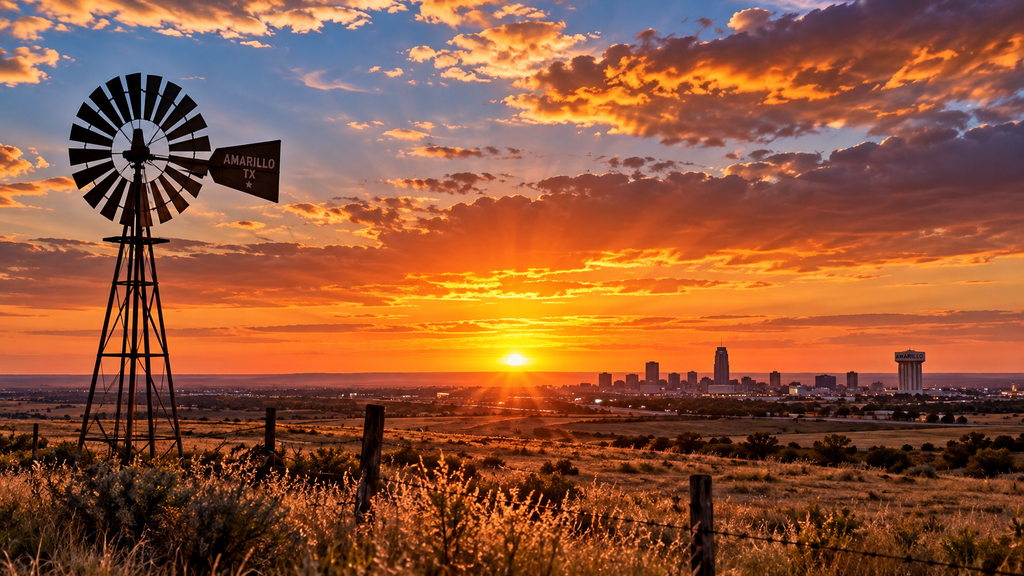
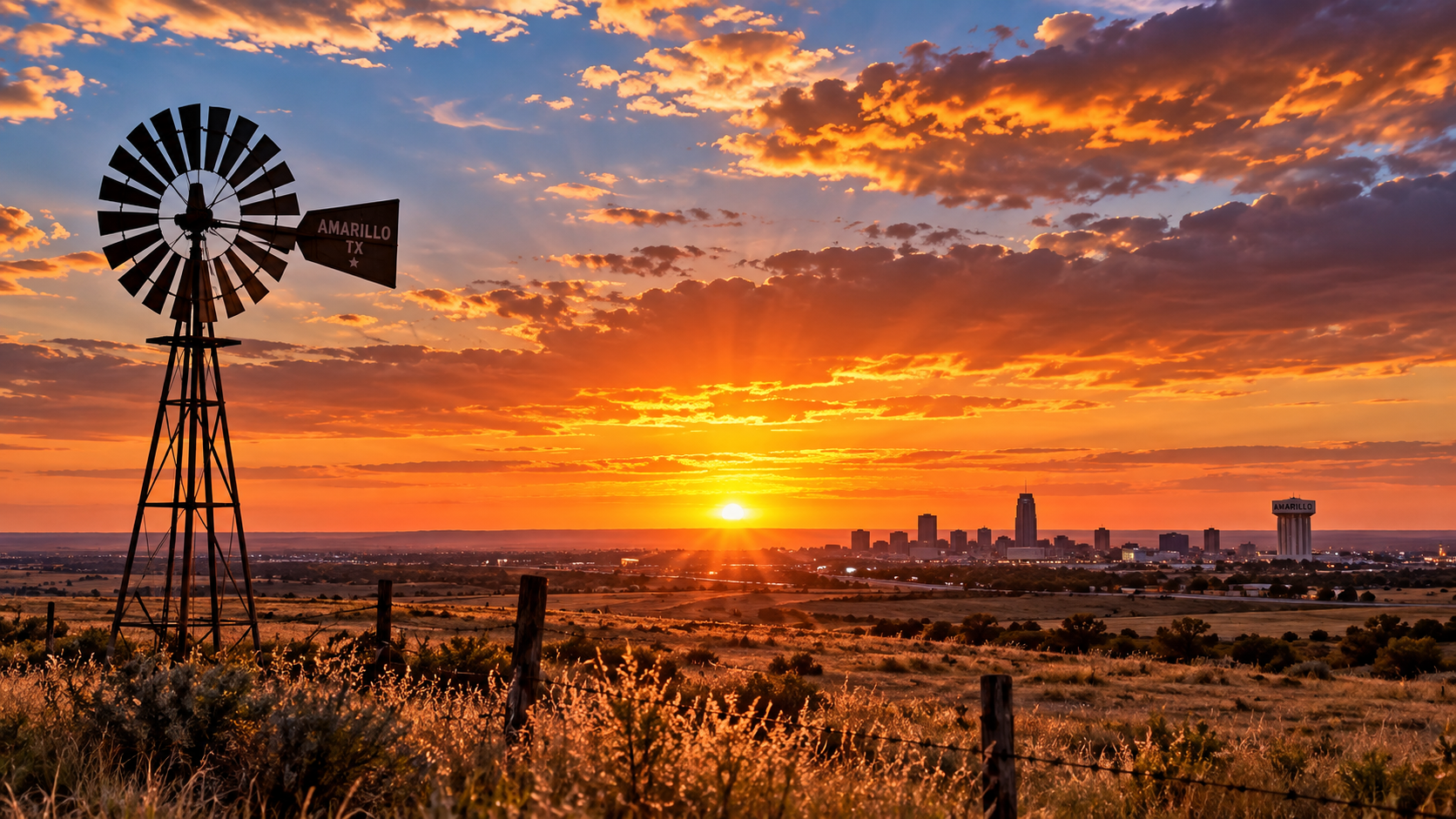
    The land is incredibly open. We joke that you can practically see the curvature of the Earth from here, but all that open sky gives us some of the most spectacular sunsets you’ll ever see.

    We also get four distinct seasons—which occasionally all make an appearance during the same week.

    And then there’s the wind.

    Oh, the wind.

    After living here my entire life, I still haven’t learned to love it.

    The National Weather Service actually describes the Texas Panhandle as one of the windiest regions in the United States, with our strongest winds most common in winter and spring.

    Those of us who live here require fewer meteorological details.

    We just call it Tuesday.

    Amarillo, Bushland or Canyon?

    One of the first conversations I have with relocating buyers is about what they’re actually looking for in a community.

    Amarillo, Bushland and Canyon are close to one another, but they offer very different experiences.

    Amarillo

    If you want city conveniences and the widest variety of housing styles and ages, Amarillo gives you plenty of options.

    You’ll find everything from established neighborhoods with mature trees to brand-new developments. You’re also close to shopping, restaurants, healthcare, entertainment and many of the area’s major employers.

    Bushland

    Head west and things start opening up.

    Bushland has more of a small-community feel while still being very close to Amarillo. You’ll see newer development, larger lots in some areas and considerably fewer mature trees.

    For many people, it offers a nice middle ground between living in the city and moving farther into the country.

    Canyon

    Then there’s Canyon.

    If someone asked me to picture the classic version of a small Texas town, Canyon would be pretty close.

    There’s a historic town square with local shops and restaurants, West Texas A&M University, established neighborhoods and quite a bit of new residential development.

    WT is an important part of the community and has particularly strong ties to agriculture, including animal science and pre-veterinary education.

    Canyon also sits near Palo Duro Canyon, so the landscape starts changing as you move toward the canyon rim.

    When I’m helping relocating buyers compare these communities, my job isn’t to tell them where they should live. It’s to help them understand the differences, give them the information and resources they need, and let them decide which area feels most like home.

    Usually, it doesn’t take long before they know.

    If You Visit Before Moving, Don’t Just Tour Houses

    When someone comes to town for a relocation trip, I don’t want them spending the entire visit inside houses.

    I want them to understand where they’re moving.

    I’d take you around Loop 335 and show you where Amarillo is growing and where new residential development is happening.

    Then we’d head down Historic Route 66 along Sixth Avenue to see some of the eclectic side of Amarillo—historic buildings, antique shops, restaurants, murals and plenty of personality.

    We’d drive through downtown and Polk Street and see places like Hodgetown and the Amarillo Civic Center.

    Then we’d head west toward Bushland so you could actually feel the difference between living in Amarillo and living outside the city.

    And finally, we’d head south to Canyon.

    We’d drive around the square, through the university and past some of the newer developments. If we had time, we’d head toward Palo Duro Canyon and take in a little of the landscape that makes this part of the Panhandle so special.

    And if I planned our day correctly?

    We might just finish somewhere with a glass of wine and watch that enormous Texas sky turn pink and orange.

    Because you really should see a Panhandle sunset before you make up your mind about us.

    What Should You Know About Buying a House Here?

    Once you’ve decided the Amarillo area feels like home, then we can start talking houses.

    One of my first questions will be whether you’re looking for a traditional neighborhood with city utilities or whether you want some land.

    If you’re looking at acreage, wells and septic systems may become part of our due diligence.

    We’ll also pay attention to the roof.

    We get hail.

    Roof age, condition and insurability matter here, and those are things I want my buyers thinking about before—not after—we fall in love with a house.

    We’ll also pay attention to signs of movement and settling. Our soil conditions can contribute to foundation movement, and while some settling over the life of a home isn’t unusual, anything that concerns us is something we investigate rather than guess about.

    That’s why I believe strongly in good inspections.

    I don’t expect my buyers to know what they’re looking at. That’s what the professionals are for. A good inspector can help us identify potential issues so we can make informed decisions about what needs additional evaluation or what repairs may need to be addressed.

    New construction can mean less immediate maintenance, but it also tends to come with a higher price per square foot.

    If you’d rather have more space for your money, an older home that has been thoughtfully updated may be worth considering. With older properties, we’ll pay attention to things like previous updates, major systems, drainage, foundation movement and even mature trees planted too close to the house.

    There isn’t one correct answer.

    There’s the house that works for you.

    But Here’s the Part of Amarillo I Can’t Put in a Listing Description

    It’s the people.

    That’s probably what I would want you to know most before moving here.

    Neighbors still introduce themselves.

    Families tend to stay connected. Friends have a funny way of becoming family.

    And when something happens to someone in this community, people show up.

    They bring food. They raise money. They make phone calls. They take care of each other’s kids. They find some way to help.

    I’ve lived here my whole life.

    I still complain about the wind.

    I still wish we had more trees.

    And there are definitely days when I’d happily trade a tumbleweed for an ocean view.

    But this is home.

    And there’s something pretty special about getting to help someone else make it theirs, too.

    Thinking About Moving to Amarillo?

    I’m DeeDee Bennett, a Realtor with The Homestead Property Group, and I’ve spent my life in the Texas Panhandle.

    If you’re considering a move to Amarillo, Canyon, Bushland or the surrounding area, I’d be happy to help you get to know the area before we ever start looking at houses.

    Because finding the right home starts with finding the place where your life fits.

    Every Home Tells a Story — Let me help you write your family’s next chapter.